Choosing the best proximity sensor in 2026 depends on your application, target material, sensing distance, environment, and budget. Some users need a low-cost sensor for Arduino or DIY automation, while others need rugged industrial models for factory equipment, conveyor systems, and OEM manufacturing.
The good news is that the market now offers a wide range of proximity sensors across every budget tier. From simple inductive sensors for metal detection to advanced photoelectric and ultrasonic models for precise industrial automation, buyers can now choose from more options than ever before.
The best proximity sensors in 2026 include LJ12A3-4-Z/BX for DIY users, HC-SR04 for budget distance measurement, TL-W5MC1 for compact automation, and E3Z-D62 for industrial detection. Premium brands such as Omron Automation, Pepperl+Fuchs, and SICK remain top choices for demanding environments.
In this guide, we compare the best proximity sensors for different use cases, including industrial automation, robotics, OEM sourcing, and hobby electronics. We also cover proximity sensor pricing, strengths, limitations, and buying tips to help you choose the right model.
Quick Comparison: Best Proximity Sensors in 2026
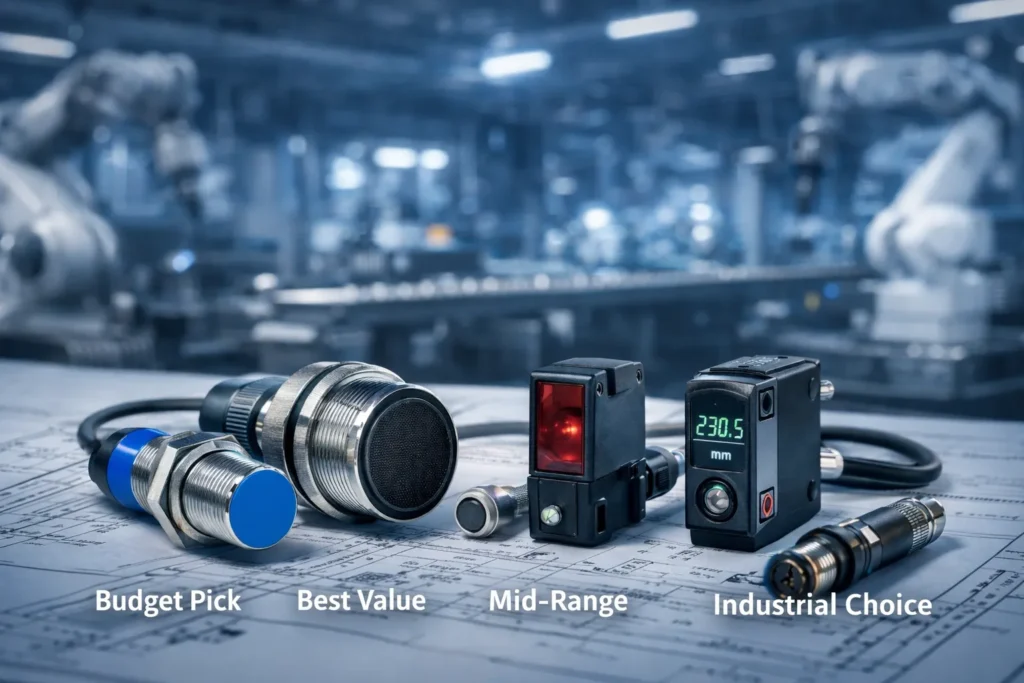
| Model | Sensor Type | Best For | Typical Price | Recommendation Level |
|---|---|---|---|---|
| LJ12A3-4-Z/BX | Inductive | Arduino / DIY Projects | $3–$8 | Best Budget |
| HC-SR04 | Ultrasonic | Distance Measurement | $2–$5 | Best Value |
| TL-W5MC1 | Inductive | Compact Automation | $20–$60 | Best Mid-Range |
| E3Z-D62 | Photoelectric | Industrial Detection | $40–$120 | Best Industrial |
| Pepperl+Fuchs Series | Industrial Sensor | Harsh Environments | $80–$200+ | Best Premium |
How We Selected the Best Proximity Sensors
To create this list, we focused on the factors that matter most to engineers, automation buyers, and OEM sourcing teams.
Reliability
We prioritized models known for stable performance and repeatable detection.
Application Fit
Each sensor is matched to a clear use case instead of a generic one-size-fits-all recommendation.
Value for Money
We compared pricing against durability, range, and industrial practicality.
We also considered popularity in automation projects, integration ease, and suitability for both entry-level and industrial buyers.
Best Budget Proximity Sensor: LJ12A3-4-Z/BX
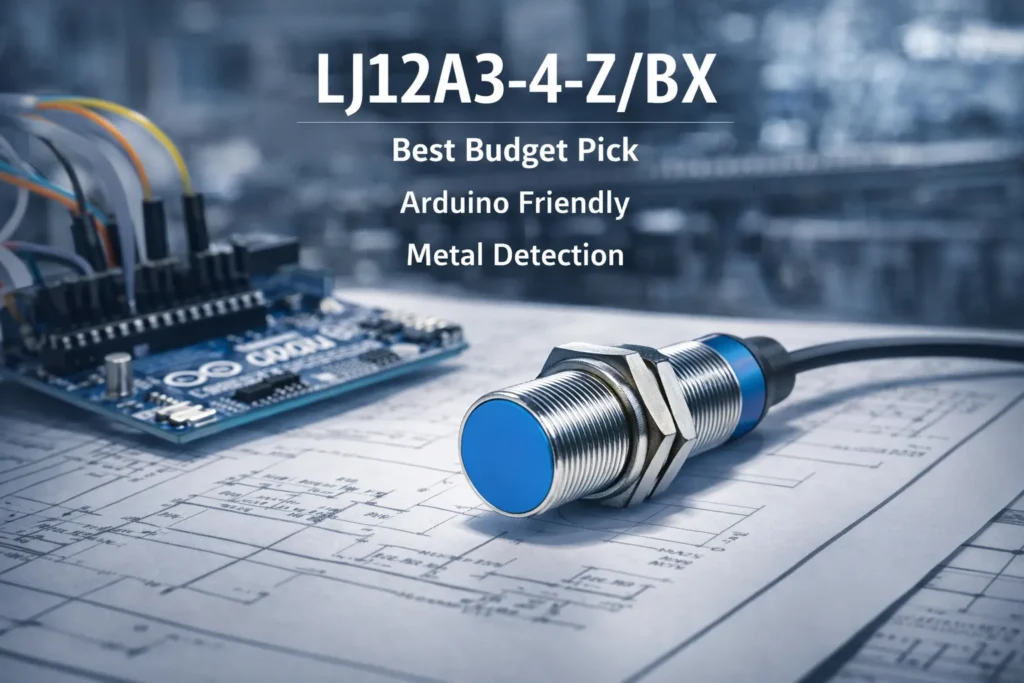
The LJ12A3-4-Z/BX remains one of the most popular inductive proximity sensors in 2026. It is affordable, easy to find, simple to wire, and widely used in Arduino projects, educational kits, and low-cost metal detection applications.
Why It Stands Out
Extremely low price, simple integration, and dependable short-range metal detection make it ideal for hobby and entry-level automation projects.
Typical Use Cases
Arduino projects, DIY CNC machines, small robots, and simple metal position detection tasks.
| Model | Detection Type | Typical Range | Price |
|---|---|---|---|
| LJ12A3-4-Z/BX | Inductive | 4 mm | $3–$8 |
Pros:
- Very low cost
- Easy to integrate into hobby projects
- Reliable for short-range metal detection
- Widely available
Cons:
- Limited sensing distance
- Not suitable for non-metal objects
- Not designed for demanding industrial environments
Best Ultrasonic Sensor: HC-SR04
The HC-SR04 is technically an ultrasonic distance sensor, but it is still one of the most widely used low-cost non-contact detection modules on the market. It is especially useful for education, robotics, and distance-based object sensing.
If you need an affordable sensor for measuring distance in a prototype, the HC-SR04 remains one of the easiest starting points.
Pros:
- Very affordable
- Excellent for distance measurement
- Works on many object types
- Large maker community support
Cons:
- Not ideal for harsh industrial use
- Performance can vary depending on surface angle and environment
- Less rugged than industrial ultrasonic sensors
| Model | Technology | Typical Range | Price |
|---|---|---|---|
| HC-SR04 | Ultrasonic | 2 cm–400 cm | $2–$5 |
Best Mid-Range Sensor for Automation: TL-W5MC1
If you need a better-built sensor for automation systems, the TL-W5MC1 is a strong mid-range choice. It offers improved durability, compact design, and reliable operation in industrial control systems compared with hobby-grade alternatives.
This type of sensor is often used in:
- Compact machinery
- Light industrial production lines
- Position detection in automation systems
- Equipment retrofits
Strengths
More stable performance, industrial-style housing, and better long-term reliability than entry-level sensors.
Limitations
Still limited in range compared with photoelectric or ultrasonic industrial solutions.
| Model | Type | Best Use | Price |
|---|---|---|---|
| TL-W5MC1 | Inductive | Automation / Compact Machinery | $20–$60 |
Best Industrial Proximity Sensor: E3Z-D62
For industrial applications where precision and reliability matter, the E3Z-D62 is one of the top performers in 2026. This photoelectric sensor is commonly selected for conveyor systems, production line automation, packaging equipment, and object detection where longer range is required.
Although it is more expensive than basic proximity sensors, it provides:
- Longer detection range
- High-speed response
- Greater flexibility across different materials
- Better performance in industrial automation environments
If your application involves conveyor monitoring, packaging machinery, or product counting, a photoelectric model like the E3Z-D62 is often the better long-term investment.
| Model | Technology | Typical Price | Best For |
|---|---|---|---|
| E3Z-D62 | Photoelectric | $40–$120 | Industrial Object Detection |
Best Premium Choice for Harsh Environments
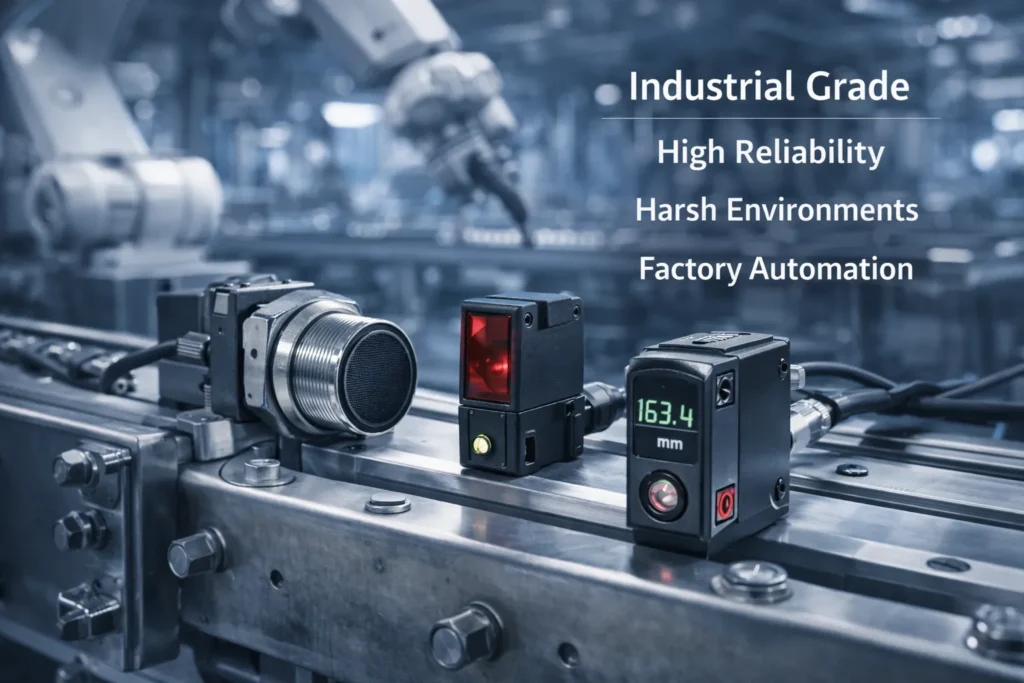
When the operating environment is wet, dusty, oily, or otherwise demanding, premium industrial sensor brands remain the best option. Pepperl+Fuchs, SICK, Omron, and other high-end manufacturers continue to dominate harsh-environment sensing in 2026.
Why Premium Sensors Cost More
They offer better housing quality, stronger certifications, improved repeatability, longer service life, and advanced communication features.
Best Applications
Automotive lines, heavy equipment, food processing, logistics systems, and smart factory automation.
| Brand Tier | Typical Price | Recommended For |
|---|---|---|
| Budget / Generic | $2–$30 | DIY / Testing |
| Mid-Range Industrial | $20–$100 | Light Manufacturing |
| Premium Industrial | $80–$250+ | Critical Industrial Operations |
Best Proximity Sensor by Use Case
There is no single “best” proximity sensor for every buyer. The right choice depends on what you are trying to detect and where the sensor will be used.
| Use Case | Best Sensor | Reason |
|---|---|---|
| Arduino / DIY | LJ12A3-4-Z/BX | Affordable and simple |
| Distance Sensing | HC-SR04 | Low-cost ultrasonic measurement |
| Compact Automation | TL-W5MC1 | Reliable industrial-style performance |
| Conveyor Detection | E3Z-D62 | Longer range and flexible detection |
| Harsh Environments | Pepperl+Fuchs / SICK | Durability and certifications |
Buying Guide: What to Consider Before Choosing a Proximity Sensor
Before purchasing, consider the following technical and commercial factors.
Target Material
If you only need to detect metal, an inductive sensor is often the most cost-effective choice. For plastic, liquid, or glass, consider capacitive, photoelectric, or ultrasonic options.
Detection Distance
Short-range sensing usually favors inductive sensors, while longer detection applications often require photoelectric or ultrasonic technologies.
Environment
Dust, oil, vibration, moisture, and washdown requirements can strongly affect sensor selection and price.
Output Type
Check whether your control system requires NPN, PNP, analog, relay, or smart communication such as IO-Link.
Brand Comparison: Which Manufacturers Are Most Reliable?
Brand selection matters, especially for long-term industrial deployment. Well-known manufacturers generally cost more, but they reduce risk in critical systems.
| Brand | Market Tier | Known For |
|---|---|---|
| Omron | Premium | Automation reliability and broad product range |
| Pepperl+Fuchs | Premium | Industrial durability and precision |
| SICK | Premium | Advanced optical sensing and logistics solutions |
| Autonics | Mid-Range | Affordable industrial quality |
| Generic OEM | Budget | Cost-driven sourcing |
Where to Buy Proximity Sensors in 2026
Buyers today usually source sensors from one of three channels:
- Authorized distributors for branded genuine parts and technical support
- Marketplaces for low-cost single-unit purchases and prototypes
- Direct suppliers for OEM, wholesale, and RFQ-based sourcing
For small orders, marketplaces and catalog distributors are convenient. For volume purchasing, however, direct RFQ sourcing is often the best path because it provides:
- Lower unit pricing
- MOQ discounts
- Inventory planning support
- Cross-reference assistance
- Alternative brand options
If you are buying for production, avoid relying only on retail listings. A direct RFQ can often unlock better pricing and more stable supply.
Related Reading
Browse Sensor Categories
Explore more industrial sensing products for OEM and automation use.
Request Bulk Pricing
Submit your RFQ for wholesale or production quantity sensor sourcing.
Final Recommendation
The best proximity sensor in 2026 depends on the job you need it to do.
If you need a simple, affordable sensor for metal detection, the LJ12A3-4-Z/BX is still one of the best entry-level options. If you need low-cost distance measurement, the HC-SR04 remains a popular choice. For better automation performance, the TL-W5MC1 is a strong mid-range option, while the E3Z-D62 stands out for industrial detection applications. In demanding factory environments, premium brands such as Pepperl+Fuchs and SICK continue to justify their higher prices through reliability and long service life.
In short, the best sensor is the one that matches your application, environment, and budget without over- or under-specifying the job.
Frequently Asked Questions
Which proximity sensor is best for Arduino?
The LJ12A3-4-Z/BX is one of the best proximity sensors for Arduino users because it is affordable, easy to wire, and reliable for short-range metal detection.
What is the best industrial proximity sensor in 2026?
For many industrial applications, the E3Z-D62 is a strong choice due to its long detection range and versatility. For harsh environments, Pepperl+Fuchs and SICK remain premium options.
Are expensive proximity sensors worth it?
Yes, when reliability, certifications, long-term service life, and stable industrial performance are required. For simple hobby projects, lower-cost sensors are often enough.
Can I reduce cost by ordering in bulk?
Yes. OEM and wholesale orders often receive much better pricing than single-unit retail purchases, especially when sourced directly through RFQ.
Need Help Finding the Right Sensor?
MOZ Electronics supports OEM buyers, engineers, and purchasing teams with sensor sourcing, quote support, and bulk order assistance.