
Embedded Processors and Controllers
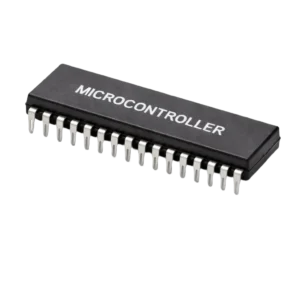
Embedded processors and controllers power everything from ultra-low-power IoT nodes to high-performance edge systems. Key families include MCUs (microcontrollers) for real-time control and low power, MPUs (microprocessors) for Linux/complex UIs, DSP/DSC for fast signal processing and motor/power control, SoC/ASSP/ASIP for highly integrated or application-specific workloads (e.g., vision/AI), RF SoCs for wireless connectivity, and programmable logic (CPLD/FPGA + configuration memory) for parallel acceleration and flexible interface bridging. Together they cover the full spectrum of performance, power, cost, and integration.
Showing 1–30 of 149 results
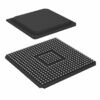

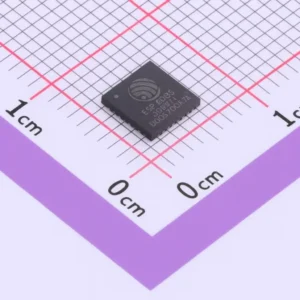
-
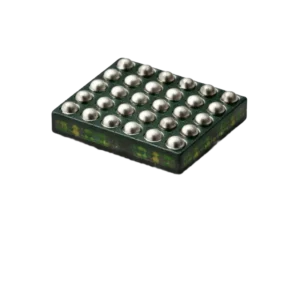
DSBGA-8 footprint for the smallest prototypes and z-height budgets.
-
Full MSPM0C1104 feature set (24-MHz M0+, 12-bit ADC, UART/I²C/SPI) in a minuscule package.
-
Explicit X-device status to de-risk production—prototype now, change package later.
- Tri-radio on one chip: Dual-band Wi-Fi 6 + BLE 5 + IEEE 802.15.4 for Thread/Zigbee in a single, compact MCU.
- Security built-in: Secure boot, XTS-AES memory encryption, HMAC, RSA/ECC/ECDSA, TRNG, APM & PMP hardening—ready for zero-trust IoT.
- Designed for battery life: LP RISC-V core, deep-sleep with LP SRAM retention, Wi-Fi TWT, and fine-grained PMU control.
- Tri-radio in one chip: Wi-Fi 6 + Bluetooth LE 5.3 + 802.15.4 (Zigbee/Thread) with built-in coexistence on a single antenna.
- Secure by design: Secure boot, XTS-AES flash encryption, digital signature, RSA/ECC, and HMAC in hardware.
- Ultra-low power: Deep-sleep around 7 µA with LP-SRAM retention and Target Wake Time to extend battery life.
- Low power without compromises – Deep-sleep around 7 µA with LP memory retention, fast wakeup, and flexible PMU states. ETM and GDMA enable peripheral-driven data paths so your CPU can nap.
- Security you can ship – Secure Boot, flash encryption, and a full hardware crypto suite (AES/SHA/RSA/ECC/ECDSA/HMAC), plus a power-glitch detector and true RNG, help protect firmware/IP and elevate trust.
- Radio versatility – Bluetooth LE 5.3 with 2 M and Coded PHY for either speed or range, plus 802.15.4 for Thread/Zigbee/Matter—covering the majority of modern IoT transports with one tiny chip.
-
Dual-core HP RISC-V up to 360 MHz + LP RISC-V up to 40 MHz for always-on tasks.
-
Rich vision & video engine: JPEG codec, ISP (1080p), PPA (scale/rotate/blend), H.264 encoder (1080p@30 fps).
-
Comprehensive security: Secure Boot, XTS-AES flash/PSRAM encryption, TRNG, RSA/ECDSA/HMAC/SHA accelerators, and access-permission management.
- USB device/host ready: Full-speed USB OTG with on-chip PHY streamlines accessories and field update paths.
- ULP always-on sensing: A dedicated ULP coprocessor handles RTC GPIO/ADC/touch while the main CPU sleeps.
- Hardened security chain: Secure boot + flash encryption + hardware AES/SHA/RSA and true RNG.
-
USB all the things: Native USB 2.0 Full-Speed OTG plus a built-in USB-Serial/JTAG device for programming, logging, and on-chip debug with minimal parts.
-
Vision & UI ready: Parallel LCD (8–16-bit RGB/I8080/6800) and DVP camera interfaces up to 40 MHz, with YUV/RGB conversions for low-cost displays and sensors.
-
Hardened by design: Secure Boot, Flash Encryption, AES-128/256, SHA-2, RSA up to 4096-bit, HMAC, Digital Signature, and TRNG for modern, production-grade security.
Product Families & Typical Uses
MCU (Microcontroller)
-
Typical cores: Arm® Cortex-M0+/M3/M4/M7/M23/M33, RISC-V RV32, 8051/AVR (legacy/ultra-low-end).
-
Memory/clock range: 16 KB–4 MB Flash, 2 KB–1 MB RAM, up to ~600 MHz (high-end M7/RISCV).
-
Peripherals: Timers/PWM, ADC/DAC, op-amps/comparators, capacitive touch, USB FS/HS, CAN/CAN-FD, Ethernet/TSN, SDIO, crypto accelerators, TrustZone-M.
-
Power: Deep-sleep in nA–µA, STOP/standby states, fast wake (µs).
-
Dev ecosystem: Vendor HAL + CMSIS/LL, FreeRTOS/Zephyr, abundant eval kits and reference designs.
-
When to choose: Deterministic control, tight energy budget, minimal BoM, fast boot, simple UIs.
-
Watch-outs: RAM under-sizing (stacks, DMA, TCP/IP, TLS), peripheral pin mux conflicts, ADC performance vs noise/layout.
MPU (Microprocessor)
-
Typical cores: Arm® Cortex-A5/A7/A53/A55, RISC-V 64-bit, sometimes paired with Cortex-M for real-time.
-
Memory/clock: External DDR3/4/LPDDR, eMMC/NAND; 400 MHz–2+ GHz.
-
Peripherals: LCD/MIPI-DSI/CSI, multi-Gigabit Ethernet, PCIe, USB3, camera ISPs, GPU/NPU on some SoCs.
-
OS: Linux (Yocto/Debian/Buildroot), sometimes RTOS on companion M-core.
-
When to choose: Rich UI, multimedia, heavy networking, containerized apps, high-level frameworks.
-
Watch-outs: Power rails/sequencing, DDR layout (SI/PI), secure boot chain, thermal design, longer bring-up.
DSP / DSC (Digital Signal Processor / Digital Signal Controller)
-
Capabilities: Single-cycle MAC, SIMD/VLIW units, saturating/bit-rev arithmetic, deterministic pipelines.
-
Peripherals: High-res PWM, fast ADC trigger chains, fault inputs, encoder/QEI, sigma-delta filters.
-
When to choose: FOC/servo drives, PFC/inverters, advanced filtering, audio/voice, vibration analytics.
-
Watch-outs: Fixed-point scaling/overflow, interrupt jitter, tight control-loop scheduling, codegen/optimizer assumptions.
SoC / ASSP / ASIP (Application-Specific)
-
Make-up: CPU + GPU/NPU + media blocks + high-speed I/O; ASIP = customized ISA for a domain (e.g., crypto, vision).
-
Strengths: Highest integration and throughput at lowest system power for the target workload.
-
When to choose: Edge AI (CV/NLP), multi-stream video encode/decode, security appliances, drones/robotics.
-
Watch-outs: Toolchain maturity, model/runtime compatibility (TFLM/ONNX/TVM), vendor SDK lock-in, longevity.
RF SoC
-
Radios: BLE/BT, Wi-Fi (2.4/5 GHz, Wi-Fi 6), Sub-GHz (FSK/LoRa), Thread/Zigbee/802.15.4, NB-IoT/LTE-M.
-
Integration: PA/LNA, matching nets, DC-DC/LDO, sensor hubs; secure boot + OTA stacks common.
-
When to choose: Battery IoT, wearables, trackers, smart home/industrial nodes.
-
Watch-outs: Antenna matching/efficiency, coexistence (BT+Wi-Fi), regulatory (FCC/CE/TELEC), low-power states vs latency.
Programmable Logic (CPLD/FPGA + Config Memory)
-
Strengths: Cycle-accurate parallelism, protocol bridging, soft/hard CPU cores (MicroBlaze/Nios V/RV64).
-
Memory: External QSPI/Octal/SD-mode config; ECC-capable BRAM/URAM on larger parts.
-
When to choose: Multi-Gbps SERDES, deterministic pipelines, hardware offload, legacy/odd-ball interfaces.
-
Watch-outs: Power sequencing/inrush, bitstream security, timing closure, tool licensing, thermal density.
Key Selection Criteria
-
Performance & Real-time: clock/IPC, FPU/DSP/NPU, interrupt latency, deterministic peripherals.
-
Power & Thermals: sleep/standby currents, DVFS, low-power peripherals, package θJA.
-
Memory & Bandwidth: on-chip Flash/RAM, external DDR, cache/TCM, bus architecture.
-
Interfaces & Connectivity: ADC/DAC, timers/PWM, serial buses, camera/display, Ethernet/TSN, wireless stacks.
-
Safety & Security: secure boot, crypto engines, key storage/TrustZone, ECC/CRC, functional safety (ISO 26262/IEC 61508).
-
Ecosystem & Tools: IDE/compilers/debug, RTOS/Linux, drivers/middleware, reference designs, longevity.
-
Cost & Supply: BOM/TCO (including power, cooling, certification), lead time, second-source options.
Popular Embedded Processor & Controller Manufacturers
-
Microchip — Broad MCU/DSC portfolio (PIC®, AVR®, SAM), dsPIC® for motor/power control, 32-bit ARM® MCUs, secure elements, and long-lifecycle industrial/automotive support.
-
STMicroelectronics — STM32/STM8 MCU families, rich analog/peripherals, STM32MP1 MPUs for Linux, strong ecosystem (CubeMX/HAL), and extensive connectivity/industrial options.
-
NXP — i.MX MPUs for HMI/edge AI, LPC & Kinetis MCUs, S32 automotive platform (body/chassis/EV/ADAS), secure elements and industrial networking.
-
Texas Instruments — C2000™ real-time controllers for motor/digital power, Sitara™ MPUs (Linux/UI/TSN), MSP430™ ultra-low-power MCUs, and heritage DSPs with robust analog/power companions.
-
Renesas Electronics — RA/RX/RL78 MCUs, RZ MPUs, functional-safety and industrial Ethernet offerings, strong tools (FSP) and long-term supply for automotive/industrial.
-
Silicon Labs — Wireless SoCs and MCUs (EFR32/EFM32 “Gecko”) with BLE, Zigbee, Thread, Matter, Sub-GHz; low-power IoT focus and production-grade stacks.
-
Intel — x86 embedded platforms (Atom®, Core™, Xeon® D) for high-performance edge compute, virtualization and rich I/O; strong Linux/Windows ecosystem.
-
AMD — Ryzen™/EPYC™ Embedded for graphics and compute-dense edge systems; plus adaptive SoCs and FPGAs (Xilinx Zynq®/Versal®) for real-time acceleration and vision/AI.
Typical System Architecture
-
Compute & Clocking
-
Multi-domain clocks; use hardware triggers (TIM→ADC→DMA) for jitter-free loops.
-
Keep real-time tasks on M-core (heterogeneous SoCs) and non-real-time on A-core/Linux.
-
-
Boot & Security Flow
-
ROM → First-stage bootloader (auth) → Second-stage (peripheral init) → App/Kernel; enforce measured boot, anti-rollback, secure storage for keys/certs.
-
-
Memory Topology
-
Place time-critical ISRs and control loops in TCM/ITCM; mark DMA buffers non-cacheable or use cache maintenance.
-
For DDR: length-match data strobe/data, follow vendor SI/PI guidelines, simulate if >800 MT/s.
-
-
I/O & Buses
-
Isolate noisy domains (motor drive) from analog front-ends; use proper ground partitioning/guarding.
-
Protect external ports (USB/ETH/CAN) with ESD/TVS and common-mode chokes as needed.
-
-
Power
-
Sequencing per datasheet (MPU often needs PMIC); budget inrush; brown-out reset thresholds tuned to rail sag.
-
Provide test points for rail probing and current profiling.
-
-
Debug/Production
-
Expose SWD/JTAG/UART; maintain a secure “manufacturing mode” with fuses/one-time tokens; lock debug in production.
-
-
Software
-
RTOS: priority ceiling protocols; avoid unbounded allocations in real-time threads.
-
Linux: use PREEMPT_RT if deterministic latency needed; pin IRQs and isolate CPUs for real-time work.
-
OTA: A/B slots with atomic switch + power-fail safe design.
-
Industry Snapshots
-
Consumer & IoT
-
Focus: Battery life (months/years), secure onboarding (DPP/Matter), local ML (TinyML).
-
Standards: Matter, Bluetooth SIG, Wi-Fi Alliance, regional radio (FCC/CE/TELEC/SRRC).
-
Tip: Antenna/ground clearance first; plastic thickness affects tuning.
-
-
Automotive & EV
-
Focus: Functional safety, thermal extremes, EMI/EMC, long lifecycle.
-
Standards: AEC-Q100/-Q200, ISO 26262, ASPICE, ISO 21434 (cybersecurity), AUTOSAR (Classic/Adaptive).
-
Tip: Prefer MCUs with built-in diagnostics, ECC, end-to-end protection; traceability is mandatory.
-
-
Industrial & Energy
-
Focus: Determinism, isolation, noise immunity, secure remote updates.
-
Standards: IEC 61508, IEC 61131-3, IEC 61800-5-2 (drives), IEC 62443 (security), SEMI/UL as applicable.
-
Tip: Use TSN/PROFINET/ETHERCAT-aware parts or FPGA gateways for line-rate determinism.
-
-
Medical & Health
-
Focus: Data integrity, power safety, privacy.
-
Standards: IEC 60601-1, IEC 62304 (software lifecycle), ISO 13485 (QMS), HIPAA/GDPR (privacy).
-
Tip: Event logs and immutable audit trails from day one; plan for field updates with strict validation.
-
-
Aerospace/Defense & Security
-
Focus: Reliability under extremes, radiation tolerance, supply assurance.
-
Standards: DO-178C/DO-254, MIL-STD-810/461, FIPS 140-3 for crypto.
-
Tip: Consider antifuse/flash-based FPGAs or rad-hard MCUs; derate voltages and temps.
-
Development-to-Production Tips
-
Requirements Matrix
-
Quantify: worst-case latency, throughput, memory, energy per operation, safety level, security posture, certification targets.
-
Define acceptance tests aligned to each requirement.
-
-
Prototyping & Bring-Up
-
Start with vendor eval kit; port drivers/middleware; stand up CI build and hardware-in-the-loop tests.
-
Early risks: DDR training, display/CSI camera links, high-speed PHYs, radio coexistence.
-
-
Coding Standards & Quality
-
Apply MISRA-C/C++ (MCU), CERT-C, static analysis (clang-tidy, cppcheck), unit tests, code coverage, and MC/DC where required.
-
Log everything (boot, faults, resets, updates) with structured logs and monotonic timestamps.
-
-
Manufacturing & Test
-
Design DFT: test pads, boundary scan/JTAG, loopback paths, golden image & calibration routines.
-
Create a fixture + scripted test suite (functional + RF + safety diagnostics); store per-unit test records.
-
-
Security & Update Strategy
-
Unique per-device keys; secure provisioning line; signed+versioned images; A/B or banked firmware with watchdog rollback.
-
Threat modeling (STRIDE/LINDDUN) at design freeze; periodic pentest/DFIR drills.
-
-
Supply & Lifecycle
-
Approve alternates (pin-compatible, same thermal); track PCNs/ECNs; keep a reproducible toolchain (containerize builds).
-
Archive BOM, Gerbers, firmware sources, and calibration data for ≥10–15 years where required.
-
-
Field Diagnostics
-
Add crash dumps/minidumps, on-device self-test, remote log retrieval; expose safe service mode and non-destructive resets.
-
-
If it moves or switches fast → consider DSC/DSP (control + math).
-
If it shows rich UI or handles big data → choose MPU/SoC.
-
If it sleeps most of the time and sips energy → go MCU (or RF SoC if wireless).
-
If protocols are weird or latency is absolute → add FPGA/CPLD.
-
If certification is strict → prefer families with safety/security documentation and toolchains already vetted.
FAQs
Q1: What are embedded processors?
Embedded processors are microprocessors optimized for dedicated tasks within a larger device. They typically pair with external memory/peripherals, emphasize efficiency and real-time behavior, and often run an RTOS or Linux for complex HMI, networking, or multimedia workloads.
Q2: What is a controller in embedded systems?
A controller usually refers to a microcontroller (MCU)—a single chip that integrates CPU, Flash/RAM, and peripherals. MCUs boot quickly, offer deterministic real-time control, and deliver excellent power/cost profiles for sensing and actuation.
Q3: What is the difference between an embedded processor and a microcontroller?
-
Embedded processor (MPU): higher compute/memory bandwidth, uses external DDR, suited for Linux, rich UI, and data-heavy tasks.
-
Microcontroller (MCU): all-in-one chip with on-chip memory and peripherals, ideal for low-power, cost-sensitive, real-time control.
Q4: What is the difference between an embedded controller and a CPU?
An embedded controller (MCU) is a complete control-centric SoC with integrated peripherals and real-time features. A CPU is the compute core alone; it relies on external subsystems (memory, I/O) and may not guarantee real-time behavior without a purpose-built platform.
Q5: When should I choose DSP/DSC instead of a general MCU?
Pick DSP/DSC for workloads heavy in multiply-accumulate and deterministic loops—e.g., FOC motor control, digital power conversion, advanced filtering, audio/condition monitoring—where you need high real-time throughput at modest clocks.
Q6: How do I trade off SoC vs. MCU?
Choose SoC when you need high integration/throughput (GPU/NPU, multimedia, high-speed I/O, Linux). Choose MCU for simple UI/control loops, long battery life, and fast time-to-market with minimal external components. Let compute/I-O needs, latency, power, and BOM drive the decision.
Q7: What should I consider for safety and security?
Look for secure boot, hardware crypto, protected key storage, memory protection, watchdogs, and, if required, functional-safety diagnostics and certifications. Use signed firmware and plan an OTA update/rollback strategy.
Q8: What are the most common oversights during selection?
Underestimating real-time latency, RAM/Flash for protocol stacks/filesystems/graphics/ML, lifecycle & supply, and test/OTA needs for volume manufacturing.
Summary
By mapping your application to the right family—MCU / MPU / DSP-DSC / SoC / RF SoC / CPLD-FPGA—and balancing latency, compute, power, interfaces, safety, ecosystem, and cost, you can confidently move from evaluation to reliable mass production across everything from tiny sensor nodes to AI-enabled edge systems.