
Microcontrollers MCUs
Microcontrollers (MCUs) integrate a CPU core, on-chip Flash/SRAM, rich peripherals, and power/clock management into a single, cost-effective device for embedded control. From entry-level 8/16-bit controllers to high-performance 32-bit ARM® Cortex®-M and RISC-V families, MCUs deliver the optimal balance of performance, power, and BOM cost for IoT endpoints, motor control, HMI, healthcare devices, smart energy, and industrial automation.
Modern MCUs combine analog front-ends (12/16-bit ADC, DAC, comparators) with control-grade timers (PWM, capture/compare, dead-time) and a broad set of interfaces—UART, SPI, I²C/I³C, CAN-FD, USB, Ethernet, SDIO, QSPI—so designers can connect sensors, storage, and connectivity modules with minimal glue logic. Security options such as secure boot, TrustZone®, TRNG, crypto accelerators, and key storage help protect firmware and credentials from the edge to the cloud. Ultra-low-power modes, sub-µA retention, and fast wake-up enable battery-powered designs with multi-year lifetimes.
Our catalog spans leading ecosystems including STMicroelectronics (STM32), Microchip (PIC/AVR/SAM), NXP (LPC/i.MX RT), Texas Instruments (MSP430/C2000/SimpleLink), Renesas (RA/RX/RL78), Infineon (XMC/Traveo), Silicon Labs (EFM32/BG), Nordic (nRF), Espressif (ESP32), GigaDevice (GD32), Nuvoton, Holtek, Realtek, and Raspberry Pi (RP2040). Each series ships with production-ready SDKs, HAL/LL drivers, middleware (USB, TCP/IP, Filesystem), RTOS ports (FreeRTOS/Zephyr), plus evaluation kits and reference designs to accelerate time-to-market.
Use our parametric filters to select by core, frequency, Flash/SRAM, analog resolution, interface count, package, and temperature grade. Download datasheets and compliance files, compare compatible pinouts across brands, and request RFQs with long-term supply guidance. Whether you are prototyping an edge-AI sensor node, upgrading a motor inverter, or cost-reducing a high-volume consumer device, you’ll find the right microcontroller here—with the tools and documentation to build, verify, and scale.
Showing 1–30 of 102 results

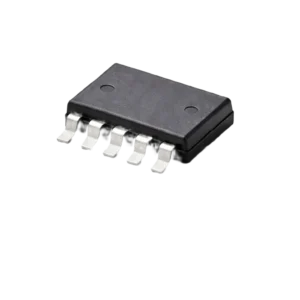
What is a Microcontroller?
A microcontroller (MCU) is a compact embedded computer-on-a-chip that integrates a CPU core, on-chip nonvolatile memory (Flash/EEPROM), SRAM, a rich set of digital/analog peripherals, and power/clock management into a single device. Compared with general-purpose processors, MCUs emphasize deterministic real-time control, low power, low cost, and robust I/O, making them ideal for appliances, industrial automation, automotive, medical devices, smart energy, building controls, wearables, and IoT edge nodes. With mature toolchains and long product lifecycles, microcontrollers bridge fast prototyping and reliable mass production.
Core Architectures and Performance Classes
-
8-bit & 16-bit MCUs
Focused on ultra-low cost and simplicity for tasks like human-machine interfaces, simple sensing, and motor/relay control. Benefits include short interrupt latency, tight code density, and instant start-up. -
32-bit MCUs (mainstream)
Dominated by ARM® Cortex®-M0/M0+/M3/M4/M7/M23/M33 and increasingly RISC-V. These deliver an excellent balance of performance, power, and ecosystem. DSP/FPU options accelerate FOC motor control, digital power, audio, and sensor fusion. -
Application-optimized families
-
Control MCUs (e.g., C2000™, dsPIC) with high-resolution PWM and fast ADC trigger chains.
-
Wireless MCUs integrating Bluetooth LE, Zigbee, Thread/Matter, Wi-Fi, Sub-GHz radios with certified stacks.
-
Cortex-M7/i.MX RT “crossover” MCUs that touch low-end application-processor performance while keeping MCU-class determinism and boot speed.
-
On-Chip Resources and Peripherals
-
Memory System: Internal Flash from tens of KB to multiple MB, SRAM from a few KB to over 1 MB, with execute-in-place (XIP) via QSPI/OSPI for external NOR. Some parts support cache, ECC, and data retention in deep sleep.
-
Analog Front-End: 12/14/16-bit ADCs (often multi-channel with scan/oversampling), DACs, comparators, op-amps/PGIAs, and analog watchdogs for closed-loop control and precision sensing.
-
Timers and Control: PWM timers with dead-time insertion, quadrature encoder interfaces (QEI), hall-sensor inputs, capture/compare units, and event-triggered ADC conversion for drivetrain and power applications.
-
Connectivity: GPIO, UART/USART, SPI, I²C/I³C, CAN/CAN-FD, LIN, USB FS/HS, Ethernet (MAC + RMII/RGMII), SDIO/SDMMC, QSPI/OSPI, MIPI-DSI/DPI or parallel RGB on HMI-class MCUs.
-
Security: True RNG, AES/SMx, SHA, RSA/ECC, PUF, secure boot, secure key storage, device unique IDs, and TrustZone® for ARMv8-M—enabling secure provisioning, encrypted OTA, and protected IP.
-
Power Modes: Dozens of sleep/stop/standby states, sub-µA retention, fast wake-up, and autonomous peripheral operation (LP timers, DMA, event system) to minimize CPU active time.
Packages, Grades, and Reliability
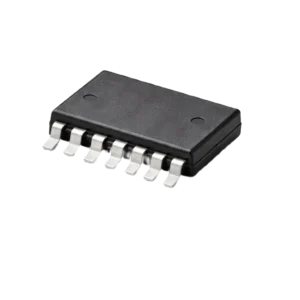
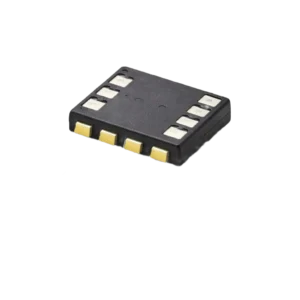
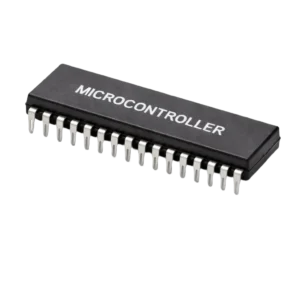
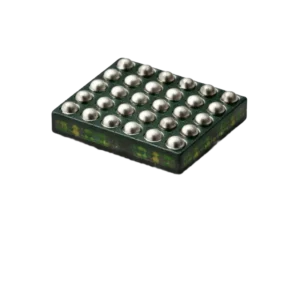
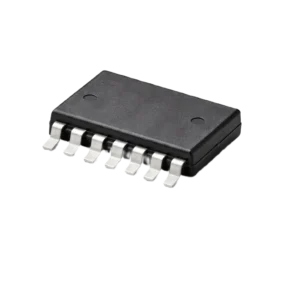
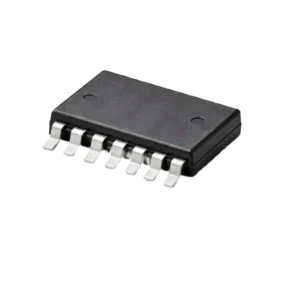
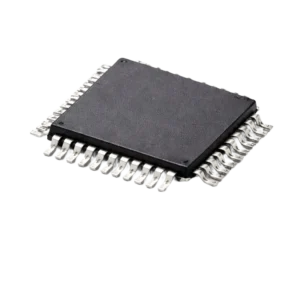
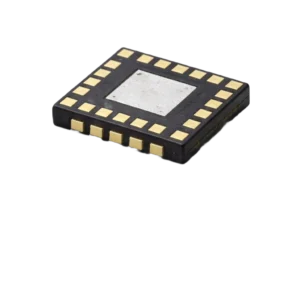
MCUs ship in DIP, TSSOP, QFP/LQFP, QFN, and BGA/WLCSP packages to balance PCB area, thermal performance, and assembly cost. Industrial and automotive variants carry AEC-Q100, -40 to 125 °C (or higher) temperature grades, extended longevity programs (10–15+ years), robust ESD/EMC, and functional safety documentation (ISO 26262 support packages on select families).
Common Application Domains
-
IoT & Edge AI: Sensor hubs performing always-on keyword spotting, anomaly detection, gesture recognition, or predictive maintenance with tinyML libraries (CMSIS-NN, TensorFlow Lite for Microcontrollers).
-
Motor Control & Digital Power: High-resolution PWM, synchronized ADC sampling, and fast control loops for BLDC/FOC, PFC, DCDC, UPS, and robotics.
-
HMI & Multimedia: TFT-LCD drivers, capacitive touch, audio I²S/SAI, integrated graphics accelerators, and camera interfaces for modern user interfaces and smart appliances.
-
Connected Devices: Wireless MCUs with certified stacks for BLE, Wi-Fi, Thread/Matter, Zigbee, Sub-GHz, plus Ethernet-enabled MCUs for gateways and field devices.
-
Medical & Instrumentation: Precision ADCs/DACs and secure boot for portable diagnostics, pumps, and patient monitoring.
Selection Guide — How to Choose the Right MCU
-
Compute & Real-Time Needs
Match core, clock, and hardware acceleration (DSP/FPU/NN) to worst-case control loop and latency targets. Check benchmark indicators (e.g., CoreMark/MHz), interrupt latency, and DMA capabilities. -
Memory Map & Headroom
Size Flash for application + libraries + OTA dual-bank margin; size SRAM for stacks, frame buffers, DMA descriptors, and temporary buffers. Keep ≥20–30% headroom for future features. -
Analog & Control Peripherals
Verify ADC resolution, sampling rate, number of simultaneous channels, trigger latency; PWM resolution and synchronization; safety features (brown-out, comparator, window watchdog). -
Interfaces & Expansion
Count UART/SPI/I²C instances, CAN-FD, USB, Ethernet, SDIO, camera/LCD, and external memory interfaces. Confirm pin muxing won’t block critical functions. -
Power & Thermal
Evaluate sleep currents, wake-up times, regulator options (SMPS/LDO), and active current at target frequencies. For battery products, model duty cycle and worst-case radio bursts. -
Security & Lifecycle
Decide on secure boot, key storage, firmware encryption, anti-rollback, and production provisioning. Check availability of PSA/SESIP reports and long-term supply guarantees. -
Tools, Middleware & Community
Ensure availability of IDE, compilers (GCC/LLVM/IAR/KEIL), HAL/LL, RTOS (FreeRTOS/Zephyr), connectivity stacks, file systems, and cloud SDKs. Active forums and reference designs shorten your schedule. -
BOM & Second Sourcing
Prefer series with pin-compatible options across vendors (or within a vendor family) to mitigate supply risk and support cost reductions without a board re-spin.
Design Tips & Best Practices
-
Clock/Power Tree: Plan PLLs, low-freq RTC sources, and voltage domains early; validate jitter needs for USB/Ethernet or motor control comparators.
-
Determinism: Use DMA, event systems, and timer-triggered ADC to keep control paths deterministic while the CPU sleeps.
-
EMC & Layout: Keep return paths tight, isolate noisy switch nodes, and separate analog grounds where recommended. Add test points for SWD/JTAG, UART logs, and current measurement.
-
Boot & OTA: Reserve a protected bootloader region and consider dual-bank Flash for failsafe firmware updates.
-
Functional Safety: For automotive/industrial safety goals, leverage vendor safety manuals, Self-Test Libraries, ECC, MPU/TrustZone, and diagnostic coverage recommendations.
Ecosystem & Popular MCU Manufacturers
We offer broad coverage from leading vendors so you can align features, tools, and supply with your program goals:
-
STMicroelectronics — STM32 families (F0/F1/F3/F4/F7, G0/G4, H5/H7, L0/L4/L5/U5, WB/WL wireless) with powerful HAL/LL, CubeMX, graphics, and security toolchains.
-
Microchip — PIC (8/16-bit), AVR, SAM (Cortex-M), dsPIC control MCUs; MPLAB X, Harmony framework, and long-term availability.
-
NXP — LPC and i.MX RT crossover MCUs with high MIPS/low latency, rich multimedia, and comprehensive SDKs.
-
Texas Instruments — MSP430 ultra-low-power, C2000™ control MCUs, SimpleLink™ wireless MCUs with verified stacks.
-
Renesas — RA (TrustZone), RX (high performance), RL78 (ultra-low power) with FSP and longevity programs.
-
Infineon — XMC, Traveo, and PSoC-derived platforms for motor control, HMI, and automotive networks.
-
Silicon Labs — EFM32 and BG/Bluetooth SoCs with excellent energy profiler tools.
-
Nordic — nRF wireless MCUs (BLE/Thread/Matter) with proven low power radio.
-
Espressif — ESP32 Wi-Fi/BLE SoCs for cost-effective connected products with a huge community.
-
GigaDevice — GD32 Cortex-M series with competitive pricing and migration paths.
-
Nuvoton, Holtek, Realtek, Raspberry Pi (RP2040) — strong options for cost-driven or specialty needs.
Why Source MCUs from Us?
-
Parametric search with deep filters (core, frequency, Flash/SRAM, ADC/DAC, timers, interfaces, package, temp grade, security).
-
Complete documentation: datasheets, reference manuals, BSPs, middleware, certifications, application notes.
-
Engineering support: pin-compatible alternatives, lifecycle guidance, and design-in recommendations.
-
Procurement-ready: inventory visibility, RoHS/REACH, and fast RFQ for prototypes through volume.