
FPGAs
FPGAs (Field Programmable Gate Arrays) are reconfigurable semiconductor devices that provide engineers with the flexibility to implement custom digital logic after manufacturing. Unlike fixed-function ASICs, FPGAs allow users to design, prototype, and deploy complex functions such as signal processing, hardware acceleration, embedded control, image processing, and communications protocols.
Our FPGA product range includes devices for low-power embedded systems, high-performance computing, and mission-critical industrial applications. With broad options for logic density, speed grade, I/O standards, and package type, FPGAs are ideal for engineers who need fast prototyping, scalability, and long-term product availability.
Showing 1–30 of 36 results
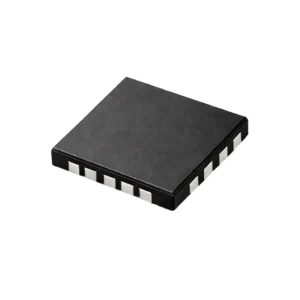
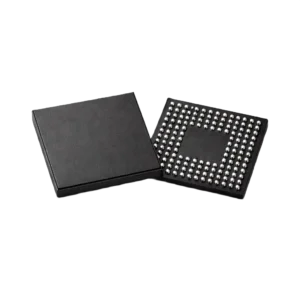
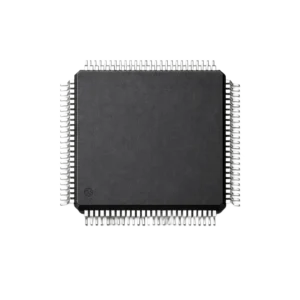
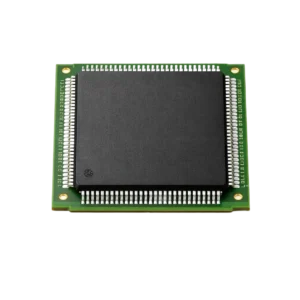
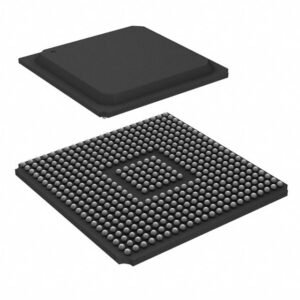
- Anti-Fuse OTP Security – Permanent programming resistant to radiation & tampering
- 250 MHz High-Speed Logic – Supports DSP, motor control, and real-time processing
- Ultra-Low Static Power – Ideal for battery-backed & power-sensitive designs
Key Features:
✅ XC7VX485T-2FFG1761C FPGA – High-speed GTX transceivers (16Gbps) ✅ 1GB DDR3 + PCIe Gen2x8 – Advanced memory & interface support ✅ FMC HPC Connectors – Expand with mezzanine cards for custom I/O
Key Features:
✅ Ultra-Low Power – 13μA quiescent current, DataGATE for dynamic power reduction ✅ High-Speed Logic – 5.7ns pin-to-pin delay, DualEDGE flip-flops for 2x efficiency ✅ Flexible I/O Banking – Supports LVCMOS, LVTTL, SSTL, HSTL (1.5V–3.3V)We provide a comprehensive selection of FPGA devices spanning from entry-level cost-optimized FPGAs to high-performance SoC FPGAs with integrated ARM cores. These devices are widely used in AI acceleration, 5G base stations, automotive ADAS, aerospace & defense systems, test equipment, and industrial automation.
Key FPGA types available include:
-
Low-power FPGAs for IoT, consumer, and portable devices
-
Mid-range FPGAs for industrial, automotive, and embedded vision applications
-
High-performance FPGAs & SoCs for data centers, 5G, networking, and AI workloads
-
Radiation-hardened and defense-grade FPGAs for aerospace and mission-critical systems
We carry devices from top FPGA manufacturers trusted globally:
-
Xilinx (AMD) – market leader in high-performance FPGAs and SoCs (Zynq, Virtex, Artix, Kintex families)
-
Intel (Altera) – Stratix, Arria, Cyclone FPGAs with strong adoption in networking and compute acceleration
-
Lattice Semiconductor – ultra-low-power and small-form-factor FPGAs ideal for IoT and consumer electronics
-
Microchip (Microsemi) – radiation-tolerant and secure FPGAs for aerospace, defense, and industrial
-
QuickLogic & Achronix – specialized FPGAs for edge AI and high-speed networking
With datasheets, application notes, and RFQ support, we make it easy to compare devices, identify drop-in replacements, or select the right FPGA for your design.
FAQ Section
Q1: What is an FPGA and how is it different from an ASIC or microcontroller?
An FPGA is a reprogrammable semiconductor device that lets designers implement custom digital circuits. Unlike ASICs, FPGAs can be reconfigured after deployment. Compared to microcontrollers, FPGAs provide much higher parallel processing performance, making them suitable for signal processing, AI acceleration, and real-time control.
Q2: What are the most common FPGA applications?
FPGAs are widely used in 5G telecom, automotive ADAS, aerospace & defense, data centers, machine vision, robotics, and embedded systems. Long-tail applications include FPGA for image processing, FPGA for AI inference, FPGA for motor control, and FPGA for software-defined radio (SDR).
Q3: Which FPGA manufacturer should I choose?
For high-performance computing and AI, AMD Xilinx (Virtex, Zynq, Versal) and Intel (Stratix, Arria) are leading options. For low-power IoT and consumer electronics, Lattice FPGAs are popular. For aerospace and secure applications, Microchip (Microsemi) FPGAs are widely trusted.
Q4: Are FPGAs suitable for AI and machine learning?
Yes. FPGA AI accelerators are increasingly used in data centers and embedded systems because they combine parallel processing, low latency, and reconfigurability. Many designs use Xilinx Zynq UltraScale+ MPSoC or Intel Stratix 10 devices for ML inference.
Q5: How do I select the right FPGA for my project?
Selection depends on logic density, I/O interfaces, speed grade, power consumption, and cost. For beginners, entry-level families like Lattice iCE40 or Intel Cyclone are great. For advanced AI or high-bandwidth networking, consider AMD Versal or Intel Agilex FPGAs.