
Optoelectronics
Optoelectronics devices emit, detect, or control light, enabling efficient conversion between electrical and optical signals. Common optoelectronic components include optocouplers, LEDs, sensors, and display devices. We provide a comprehensive selection of high-quality optoelectronic parts from the world’s most trusted manufacturers to support a wide range of electronic designs.
Showing all 11 results

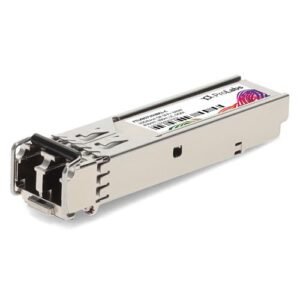
- 10G short-reach over MMF: 850 nm optics, up to 300 m reach via LC duplex on multimode fiber.
- Standards & monitoring: SFF-8432/SFF-8472 compliant with DOM for real-time diagnostics.
- Enterprise-ready build: Hot-pluggable metal housing, low EMI, and excellent ESD protection; RoHS and TAA compliant.
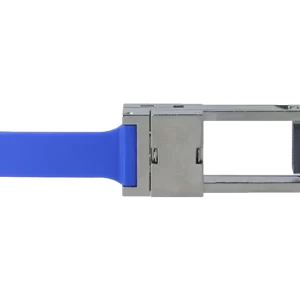
- Seamless 40G-to-10G Conversion for Cisco Networks
- Plug-and-Play Hot-Swap Installation
- Rugged, Commercial-Grade Reliability
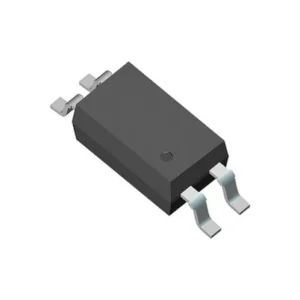
- Balanced CTR (63–125 %) with Safety Compliance: Offers moderate drive while assuring safe-isolation certification.
- High Isolation Performance: Ensures electrical separation in demanding systems at 3750 VRMS rating.
- Compact Tape-and-Reel Format: "T" suffix allows efficient SMT integration; “X001” ensures agency approved variant.
- High CTR at Low Input Current: The -3 bin (100 %–200 %) enables efficient signal coupling even with minimal LED drive, beneficial for low-power designs.
- High Isolation Voltage: With a 3750 VRMS isolation test rating and repetitive peak isolation well over 500 V, it safeguards high-voltage to low-voltage interfaces.
- Compact Low-Profile Package: SSOP-4 half-pitch package allows slim board real estate usage, making this optocoupler suitable for space-constrained applications.
- Safety-Certified Isolation (Option 1): This variant includes the “X001” safety option making it compliant for applications requiring guaranteed insulation separation (e.g., per IEC standards).
- 100-200 % CTR Bin: High transfer ratio helps reduce LED drive current, improving efficiency and reducing system power consumption.
- Compact Tape-and-Reel Packaging: “T” suffix indicates reel packaging, facilitating automated surface-mount assembly flows.
- Compact High-Performance Isolation Device: Delivers full isolation performance in a minimal footprint.
- Low Input Drive Requirement: Compatible with designs where LED drive current is constrained.
- Robust Voltage Ratings: With 80 V VCEO and 3750 VRMS isolation, it withstands demanding electrical environments.
- Mid-Range CTR (80–160 %): Well matched for designs with moderate LED drive and cost-sensitive requirements.
- High Isolation Assurance: 3750 VRMS isolation ensures safe separation between input/output circuits in noisy or high-voltage environments.
- Space-Efficient Packaging: The SSOP-4 format allows minimal board real estate while delivering full isolation performance.
- Very High CTR (130–260 %): Enables ultra-low drive currents from the LED side, reducing power consumption.
- Strong Isolation Capability: 3750 VRMS isolation ensures robust separation of circuits in harsh electrical environments.
- Compact SSOP-4 Mini-Flat Package: Designed for PCB area savings and surface-mount reliability.
- Extremely Flexible CTR Range (50–600 %): Allows designers to optimize LED drive and circuit coupling across a wide range of applications.
- Certified Option 1 Insulation: The “X001” version ensures compliance with safety insulation standards, making the part suited for critical medical/industrial isolation.
- Compact and SMT-ready Form Factor: The SSOP-4 package and tape-and-reel (T suffix) format streamline automated assembly in compact systems.
- Wide CTR Range (50–600 %): Provides selection flexibility for designers to match input current and drive conditions.
- High Isolation Performance: With 3750 VRMS test rating and robust insulation distances, it delivers reliable electrical separation.
- Compact Packaging, Robust Design: The SSOP-4 package allows integration into dense PCBs while delivering high performance.
- Efficient Isolation with Moderate CTR: The 63-125 % CTR bin balances input drive and cost, suitable for many mainstream isolation tasks.
- High Isolation Voltage: Like the rest of the series, this part provides 3750 VRMS isolation, ensuring safety between high-voltage and low-voltage domains.
- Space-Saving SSOP-4 Package: Enables use in compact PCB footprints, fitting well in modern dense electronic designs.
Optoelectronics refers to electronic components and technologies that harness the interaction between light and electricity. These devices are engineered either to convert electrical energy into light – such as LEDs, laser diodes, and displays – or to convert incoming light into electrical signals, as seen in photodiodes, optical sensors, and receiver modules. Some optoelectronic components, like optocouplers, combine both functions to provide electrical isolation while enabling safe and reliable signal transmission.
Optoelectronic devices play a critical role across industries due to their speed, energy efficiency, and immunity to electromagnetic interference. They are widely used in:
-
Signal isolation and interface protection: Optocouplers in power supplies, motor drivers, and industrial automation.
-
Lighting and indication: LEDs and LED modules in consumer electronics, automotive lighting, signage, and status indicators.
-
Sensing and detection: Phototransistors, ambient-light sensors, infrared receivers, and optical switches for smart devices, security systems, and instrumentation.
-
Display technologies: LCD backlights, OLED panels, and numeric displays used in handheld devices, appliances, and industrial equipment.
-
Optical communication: Laser emitters, photodiode receivers, and fiber-optic components for high-speed data links.
By offering a wide range of optoelectronic devices from leading global brands, we help engineers and product designers build systems that require high efficiency, precise control, strong environmental robustness, and reliable long-term performance.
Optoelectronics encompasses a broad class of electronic components that operate by generating, detecting, or controlling light. These devices serve as essential building blocks in modern electronic systems, enabling communication between optical and electrical domains. Whether used for illumination, signal isolation, sensing, or data transmission, optoelectronic components provide reliable, efficient, and high-performance solutions across a wide range of applications.
At their core, optoelectronic devices fall into two primary functional groups:
-
Light-emitting devices – such as LEDs, laser diodes, infrared emitters, and display modules, which convert electrical current into visible or invisible light.
-
Light-sensing devices – including photodiodes, phototransistors, optical sensors, and infrared receivers, which detect and convert light signals into electrical outputs.
Some components combine these functions, such as optocouplers, which use an internal LED and photodetector to transmit signals across an electrical isolation barrier. This design allows safe interfacing between high-voltage and low-voltage circuits without direct electrical connection.
Key Categories and Their Functions
-
Optocouplers (Photocouplers): Provide galvanic isolation and protect sensitive control circuits. Widely used in power supplies, motor drives, industrial automation, and safety systems.
-
LEDs & Emitters: Available in various colors, intensities, and form factors for indication, backlighting, signage, and illumination. Infrared LEDs are used for remote controls, sensors, and security devices.
-
Photodiodes & Phototransistors: Convert light into electrical current with high sensitivity. Common in optical receivers, barcode scanners, light meters, and environmental sensing.
-
Display Devices: Include LCD modules, seven-segment displays, OLED panels, and LED matrices for user interfaces, instrumentation panels, and consumer electronics.
-
Optical Sensors: Encompass ambient light sensors, IR proximity sensors, reflective sensors, and optical switches used in smart devices, automation, robotics, and occupancy detection.
-
Laser Diodes & Fiber-Optic Components: Enable precise, high-speed optical communication and data transmission in networking, telecommunications, and industrial equipment.
Advantages of Optoelectronic Components
Optoelectronics deliver several performance benefits that make them indispensable in electronic design:
-
High efficiency: Low power consumption with strong signal integrity.
-
Fast response time: Ideal for high-speed sensing and communication.
-
Electrical isolation: Enables safe and noise-immune signal transfer.
-
Compact form factors: Supports space-constrained and portable devices.
-
Long service life: Particularly for LEDs and solid-state sensing elements.
-
Resilience to EMI: Immune to electromagnetic interference, ensuring stable operation in noisy industrial environments.
Applications Across Industries
Because of their versatility and reliability, optoelectronic devices are used in diverse fields, including:
-
Consumer electronics and home appliances
-
Automotive lighting, sensing, and driver-assistance systems
-
Industrial automation, robotics, and factory equipment
-
Medical devices and diagnostic equipment
-
Smart meters, IoT devices, and intelligent building systems
-
Telecommunications, networking, and optical data links
-
Security systems, surveillance, and access control
By connecting engineers and designers to high-performance optoelectronic components from globally recognized manufacturers, we ensure dependable solutions that meet demanding performance, safety, and regulatory standards.