
You often face a tough decision: FPGA vs Microcontroller. FPGAs, as a kind of integrated circuits ICs, give you custom hardware for tasks like real-time data processing, while microcontrollers offer easy programming and low power for everyday devices.
Imagine building a smart home system or designing a car’s control panel. Your choice shapes speed, cost, and flexibility.
- The global FPGA market reached $11,380.8 million in 2023 and could double by 2030.
- Microcontrollers hit $12.1 billion in 2024 and may grow even faster.
| Industry | How FPGAs Are Used |
|---|---|
| Automotive | Control systems, automation, robotics |
| Consumer Electronics | Video acceleration, connectivity |
| Telecommunications | Data processing, network infrastructure |
| Healthcare | Diagnostic equipment, patient monitoring |
| BFSI | Trading, risk analysis |
Your decision affects your project’s success. This guide helps you choose the right tool for your needs.

Key Takeaways
- FPGAs offer flexibility and speed for complex tasks, while microcontrollers provide simplicity and low power for everyday applications.
- Choose FPGAs for projects requiring real-time processing and customization. Opt for microcontrollers for cost-effective, low-power solutions.
- Programming FPGAs involves hardware description languages, making it more complex than programming microcontrollers, which typically use C or assembly.
- FPGAs are ideal for high-speed applications like video processing, while microcontrollers excel in controlling simple devices like sensors and motors.
- Combining FPGAs and microcontrollers can enhance system performance, allowing for both high-speed processing and easy control.
FPGA vs Microcontroller Overview
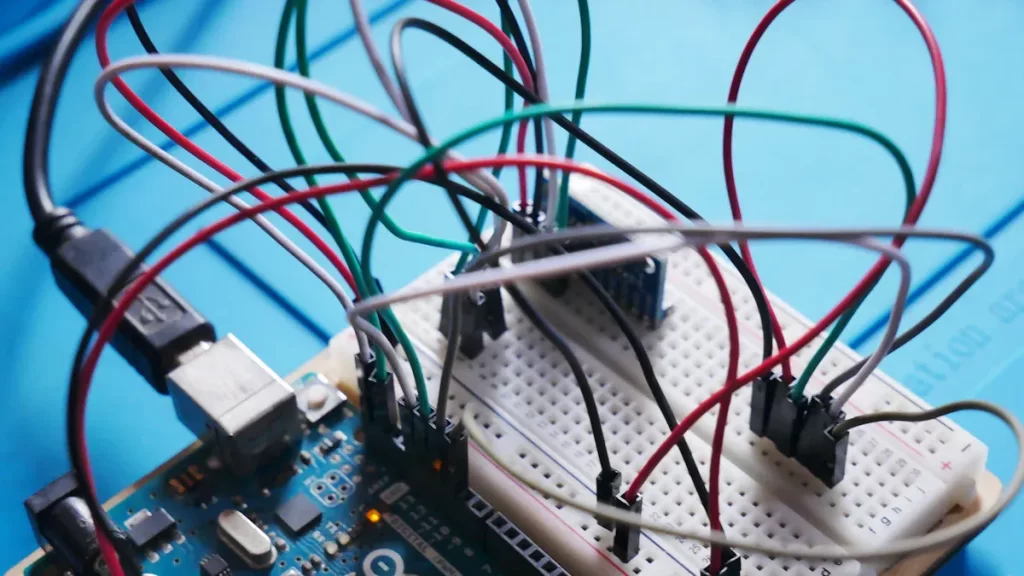
What is an FPGA?
You can think of an FPGA as a blank slate for digital circuits. FPGA stands for Field Programmable Gate Array. You get a chip that you can reconfigure to perform many different tasks. Inside, you find a grid of configurable logic blocks (CLBs), programmable interconnect points (PIPs), and input/output blocks (IOBs). These parts let you build custom hardware for your project. You use a hardware description language (HDL) to program the FPGA, which means you describe how the hardware should behave.
Tip: FPGAs let you change their function even after you install them in a device. You can update part of the chip while the rest keeps working, or you can reprogram the whole chip when needed.
FPGAs work well for real-time computing, signal processing, and tasks that need fast, flexible hardware. You see them in military systems, robotics, and Internet of Things (IoT) devices. They also handle biomedical signal processing, digital filters, and video processing.
| Feature | FPGA |
|---|---|
| Hardware Configuration | Flexible architecture, customizable |
| Programming Method | Uses Hardware Description Language (HDL) |
| Processing Capabilities | Highly customizable for various tasks |
| Application Suitability | Suitable for real-time computing, signal processing |
What is a Microcontroller?
A microcontroller is like a tiny computer on a single chip. You use it to control simple tasks in everyday devices. It has a fixed hardware layout, so you cannot change its basic structure. You program it using software, usually in C or assembly language. To dive deeper into microcontrollers, check out our Beginner’s Guide to Microcontrollers.
Here are the main parts inside a microcontroller:
| Component | Description |
|---|---|
| Processor Core | Executes instructions and calculations |
| Memory | Stores code and data |
| Interrupt Controller | Manages signals from other parts |
| Timer / Counter | Measures time and counts events |
| Digital I/O | Handles input and output signals |
| Analog I/O | Converts analog signals to digital |
| Interfaces | Connects to other devices (SPI, UART, USB) |
| Debugging Unit | Helps you find and fix software bugs |
| Power Management | Keeps the chip running smoothly |
You find microcontrollers in consumer electronics, automotive systems, smart home devices, and medical equipment. They work best for single-purpose tasks, like controlling a motor or reading a sensor.
When you compare FPGA vs Microcontroller, you see that FPGAs offer more flexibility and speed, while microcontrollers give you simplicity and low power for everyday use.
Key Differences Between FPGAs and MCUs
Architecture
When you look at the architecture of FPGA vs Microcontroller, you see a big difference. FPGAs use a grid of Configurable Logic Blocks (CLBs), Look-Up Tables (LUTs), and programmable connections. You can program these blocks to create custom hardware for your project. This setup lets you run many tasks at the same time.
Microcontrollers have a fixed design. Inside, you find a CPU, memory, and built-in features like timers and input/output ports. You cannot change how these parts connect or work. The microcontroller runs one instruction after another, so it works best for simple, step-by-step jobs.
FPGAs let you build your own digital circuits, while microcontrollers give you a ready-made computer on a chip.
- FPGAs support parallel processing with custom hardware.
- Microcontrollers use a single processing core and fixed hardware.
Performance
Performance is another key area where FPGA vs Microcontroller stand apart. FPGAs shine when you need to process lots of data quickly. You can set up an FPGA to handle many operations at once, which is perfect for things like video processing or real-time signal analysis.
Microcontrollers do not have this level of parallel power. They process instructions one at a time, so they work well for basic control tasks but struggle with high-speed jobs.
| Feature | FPGA | Microcontroller |
|---|---|---|
| Processing Type | Parallel processing for high-speed tasks | Sequential processing for simpler tasks |
| Ideal Applications | Signal processing, image processing | Low-power applications, basic control |
| Customization | Highly customizable at hardware level | Fixed architecture |
- FPGAs can run at different clock speeds and handle many tasks at once.
- Microcontrollers usually run at a set speed and focus on one job at a time.
Power Consumption
Power use matters a lot, especially for battery-powered devices. FPGAs often use more power because they run many circuits at once and have flexible hardware. If you need high performance, you may have to accept higher energy use.
Microcontrollers are built for efficiency. They use less power, which makes them great for small gadgets, sensors, and devices that need to last a long time on a battery.
Tip: Choose a microcontroller for low-power needs. Pick an FPGA if you need speed and can supply more power.
Programming
Programming is another big difference in FPGA vs Microcontroller. You program FPGAs using hardware description languages like VHDL or Verilog. This means you describe how the hardware should work, not just what the software should do. Learning to program FPGAs takes more time and requires you to understand digital circuits and parallel processing.
Microcontrollers use languages like C or assembly. You write code that runs step by step, just like on a regular computer. Most people find microcontroller programming easier to learn.
| Device Type | Programming Languages |
|---|---|
| FPGAs | Hardware description languages (VHDL, Verilog) |
| Microcontrollers | Software (C, Assembly) |
- FPGA programming has a steeper learning curve and covers more engineering topics.
- Microcontroller programming is simpler and focuses on software logic.
Cost
Cost can make or break your project. FPGAs usually cost more than microcontrollers, especially for high-end models. Entry-level FPGAs start around $50 and can go up to thousands of dollars for advanced chips.
Microcontrollers are much cheaper. You can find basic models for just a few dollars, making them perfect for mass-produced products or simple projects.
| FPGA Category | Price Range |
|---|---|
| Entry-Level FPGA | $50 – $300 |
| Mid-Range FPGA | $300 – $4,000 |
| High-End FPGA | $4,000 and above |
Note: Microcontrollers offer a cost-effective solution for most everyday electronics, while FPGAs are an investment for projects that need custom hardware and high speed.
Flexibility
Flexibility is where FPGAs really stand out in the FPGA vs Microcontroller debate. You can reprogram an FPGA to change both its hardware and firmware. This lets you update your design, fix bugs, or add new features without changing the physical chip. You can also test new ideas quickly, which helps when you need to prototype or improve your design.
Microcontrollers do not offer this level of customization. You can only change the software, not the hardware. This makes them better for simple, repeatable tasks.
- FPGAs allow you to reconfigure hardware for each project.
- You can use FPGAs for rapid prototyping and real-time testing.
- Microcontrollers work best for fixed, single-purpose jobs.
If you want to explore new designs or need to change your hardware often, FPGAs give you the freedom to do so. Microcontrollers keep things simple and steady.
FPGA vs Microcontroller Use Cases
FPGA Applications
You see FPGAs in places where speed and flexibility matter most. These chips handle real-time parallel processing, which means they can run many tasks at the same time. You find FPGAs in digital signal processing, image processing, and cryptography. They work well for high-speed data acquisition and complex calculations.
- FPGAs power video processing systems, including 4K video conferencing and advanced imaging. You get hardware acceleration and massive parallelism, which boosts performance.
- Smart city traffic management uses FPGAs to connect many video sensors and manage fast network traffic.
- Medical-surgical robotics rely on FPGAs for video processing, sensor interfacing, and motor control.
- Aerospace and defense systems use FPGAs for mission-critical tasks. For example, the BrahMos missile system uses FPGAs for precise trajectory calculations and real-time data analysis. The Tejas Light Combat Aircraft uses FPGA-based avionics for efficient flight control.
You can reprogram FPGAs to meet new mission needs. Their parallel processing and energy efficiency make them ideal for space and defense projects.
Companies like Aldec and e-con Systems use FPGAs for real-time image processing and advanced vision applications. These solutions show how FPGAs excel in demanding environments.
Microcontroller Applications
Microcontrollers help you build cost-effective and reliable devices. You find them in consumer electronics, automotive systems, and IoT devices. They control smart home gadgets, wearables, and household appliances. Microcontrollers manage device functions and let users interact easily.
In cars, microcontrollers support communication, control, and safety. They manage engine functions, chassis control, body electronics, and infotainment systems. You see them in powertrain management and safety features.
| Feature | Benefit |
|---|---|
| Affordability | Microcontrollers are affordable, making IoT devices accessible. |
| Compact Size | Their small size fits many devices. |
| Energy Efficiency | They use less power, which helps battery life. |
| Data Processing | They process data locally, saving cloud costs. |
| Connectivity Management | They manage device connections for smooth communication. |
- Low-cost microcontroller boards help you create new IoT solutions.
- You can scale microcontroller-based systems easily, which helps expand IoT applications.
- These platforms lower the barriers for entering the IoT market.
You see the FPGA vs Microcontroller debate play out in these use cases. FPGAs handle high-speed, complex jobs, while microcontrollers keep devices simple, efficient, and affordable.
Hybrid and Overlapping Scenarios
Combining Both
You can combine FPGAs and microcontrollers to create powerful systems. This approach gives you the best of both worlds. You get the flexibility and speed of an FPGA, and the easy control of a microcontroller. Many engineers use this hybrid method in advanced projects.
When you design a system with both, you face some challenges. You need to manage power use and handle complex designs. You also need skills in hardware design. However, you gain many benefits. You can customize your system, develop it quickly, and handle parallel processing tasks with ease.
| Challenges | Benefits |
|---|---|
| Power consumption | Flexibility |
| Complexity in design | Customization |
| Need for expertise in hardware design | Rapid development |
| Effective handling of parallel processing workloads |
You see this hybrid approach in industrial automation. A microcontroller manages the main operations. An FPGA processes high-speed signals from motors. This setup works well when you need both high-level control and fast, time-critical actions.
- You can use a microcontroller for simple tasks.
- You can use an FPGA for jobs that need speed and parallel processing.
Real-World Examples
Many products use both FPGAs and microcontrollers. These systems work in aerospace, automotive, and telecommunications. You find them in Multi-Processor System-on-Chip (MPSoC) designs. These chips combine several processing units and programmable logic. They give you high performance and flexibility.
| Product/System | Description |
|---|---|
| MPSoC in Aerospace | Integrates multiple processing units and programmable logic for high-performance embedded systems. |
| MPSoC in Automotive | Provides efficiency and flexibility in automotive applications. |
| MPSoC in Telecommunications | Supports advanced communication systems with integrated processing capabilities. |
You see FPGAs in space missions. They help with communications and support sensors for exploration. When paired with VORAGO microcontrollers, they boost mission performance in deep space.
- FPGAs help with communication in space.
- They support sensors and instruments for exploration.
- VORAGO MCUs work with FPGAs to improve deep space missions.
In modern telecommunications, you find emulation environments for 5G testing. These systems let you run video and voice applications as if they were on real devices. This setup shows how FPGAs and microcontrollers work together to test and improve wireless networks.
Tip: If you want to build a system that needs both control and speed, consider using both an FPGA and a microcontroller. This combination helps you solve complex problems and create advanced solutions.
| Decision Factor | FPGAs | Microcontrollers |
|---|---|---|
| Performance | Fast, parallel processing | Simple, sequential tasks |
| Flexibility | Reprogrammable hardware | Fixed hardware |
| Power | Higher usage | Lower usage |
| Cost | More expensive | Budget-friendly |
Before you choose, ask yourself:
- Does your project need high speed or simple control?
- Will you need to update hardware later?
- What is your budget?
- How much experience do you have?
FPGAs scale well and adapt to new needs. Microcontrollers keep things easy and reliable. Pick the solution that fits your goals today and tomorrow.
FAQ About Microcontroller vs FPGA
What is the main difference between an FPGA and a microcontroller?
You program an FPGA to create custom hardware for your project. You use a microcontroller as a small computer to run software. FPGAs offer flexibility and speed. Microcontrollers give you simplicity and low power.
Can you use FPGAs and microcontrollers together?
You can combine both in one system. FPGAs handle fast, complex tasks. Microcontrollers manage simple control jobs. This mix helps you build advanced devices.
Tip: Many robotics and industrial systems use both for better performance.
Which is easier to learn: FPGA or microcontroller programming?
You will find microcontroller programming easier. You use languages like C. FPGA programming needs hardware description languages, such as VHDL or Verilog. You must learn digital logic for FPGAs.
| Device | Programming Language | Difficulty Level |
|---|---|---|
| FPGA | VHDL, Verilog | Hard |
| Microcontroller | C, Assembly | Easy |
When should you choose a microcontroller over an FPGA?
You should pick a microcontroller for simple, low-cost, and low-power projects. Microcontrollers work best in devices like sensors, toys, and home gadgets. You save money and time.